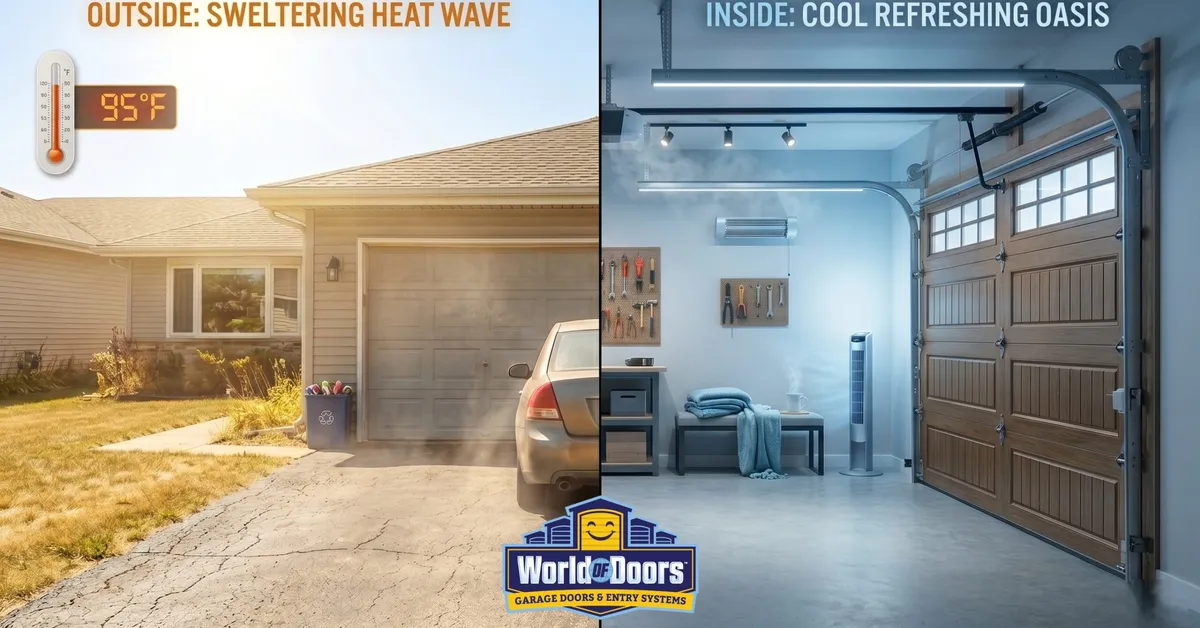
If you live in the Chicago Metro Area, you already know what “weather whiplash” feels like. It’s the reality of a January polar vortex where temperatures plummet to -10°F, followed just a few months later by sweltering August heatwaves with 95°F temperatures and stifling Midwest humidity.
As a homeowner, you feel these extremes the most inside your house. During the winter, the bedroom directly above your attached garage feels like an icebox. You crank the thermostat, but the floor remains stubbornly freezing. During the summer, that same bedroom becomes uncomfortably hot, and your air conditioning system runs non-stop to compensate.
The primary culprit draining your HVAC efficiency and ruining your indoor comfort? Your garage door. As the largest moving wall in your home, your garage door plays a massive role in your property’s overall thermal envelope. Many homeowners think that simply buying an insulated garage door in Chicago automatically solves their temperature problems. But here is the hard truth that big-box stores won’t tell you: Not all insulation is created equal.
In the garage door industry, the word “insulated” is thrown around loosely as a marketing buzzword. It can mean anything from a thin, flimsy sheet of Styrofoam glued to the back of a hollow steel door (offering a minimal R-6 rating) to a high-density, foam-injected powerhouse (boasting an R-18+ rating).
If you have an attached garage in Chicagoland, and especially if you have living space directly above or beside it, knowing the difference between basic Polystyrene and premium Polyurethane garage door insulation isn’t just technical trivia. It is the defining difference between a cozy, energy-efficient home and skyrocketing utility bills year-round.
What is R-Value, Really? (The Science of Thermal Resistance)
Before we dive into the specific materials that make up modern garage doors, let’s define the metric that measures their effectiveness.
R-Value is a measurement of a material’s thermal resistance, meaning its ability to resist the conductive flow of heat. The fundamental rule of R-Value is simple: The higher the number, the better the material is at preventing heat from passing through it. In the winter, a high R-Value keeps your expensive, furnace-heated indoor air from escaping outside. In the summer, a high R-Value blocks the scorching outdoor heat from baking the interior of your garage.
Here is a quick baseline of how garage door R-Values typically stack up:
- Uninsulated Steel Door: ~R-0 to R-2 (Virtually zero thermal protection; essentially just a sheet of metal).
- Basic Insulation (1-layer foam): ~R-6 to R-9 (Provides minor noise reduction and very basic temperature control).
- High-Performance Insulation (Dense foam): ~R-14 to R-20.4 (Maximum thermal efficiency, structural integrity, and climate control).
In a demanding climate like the Chicago Metro Area, where temperature swings can easily span a 120-degree difference over the course of a year, an R-Value of 12 should be your absolute minimum baseline for an attached garage. Anything less, and you are effectively leaving a giant, uninsulated hole in your home’s exterior envelope.
The Chicago Climate Challenge: A Four-Season Problem
When we talk about garage door insulation in Chicago, the conversation almost always defaults to winter. However, a premium insulated garage door protects your home through all four of Chicago’s distinct seasons.
1. The Brutal Winters (December – February)
When the wind chill drops below zero, a hollow steel garage door conducts the freezing cold directly into your garage space. If your home’s water pipes run near the garage walls, they are at high risk of freezing and bursting. Your car engine block stays ice-cold, putting immense strain on your battery every morning. Most importantly, the shared walls and ceilings between the garage and your living space transfer that freezing air straight into your home.
2. The Sweltering Summers (June – August)
Chicago summers bring intense heat and high humidity. An uninsulated steel garage door acts like a giant radiator baking in the direct sunlight. The steel absorbs the UV rays and radiates the heat inward, easily pushing the internal temperature of a closed garage to 110°F or more. Because heat naturally rises, that trapped, super-heated air bakes the floorboards of the bedroom above it, forcing your central A/C to work overtime.
3. The Unpredictable Spring & Fall
These transition seasons bring massive daily temperature fluctuations. It might be 40°F in the morning and 75°F by the afternoon. These rapid swings cause cheap, uninsulated metal panels to warp, expand, and contract, which can throw the door out of alignment. Proper insulation stabilizes the internal panel temperature, preventing structural warping over time.
Polystyrene Insulation (The “Coffee Cup” Solution)
Polystyrene is essentially the exact same material used to make Styrofoam coffee cups, disposable coolers, and packing peanuts. In the context of garage doors, it is manufactured in rigid, rectangular sheets that are cut to size and inserted into the empty tracks of the steel door panels.
How It Works
- Vinyl-Backed (2-Layer Door): The rigid foam panel is tucked against the exterior steel door skin and covered with a flexible vinyl sheet on the inside. This is the absolute entry-level option for a basic insulated garage door.
- Sandwich / Steel-Back (3-Layer Door): The polystyrene foam is sandwiched tightly between two solid layers of steel, creating a much more durable and finished look inside the garage.
The Pros
- Cost-Effective: Polystyrene is the budget-friendly option. If you need a slight upgrade without breaking the bank, it gets the job done.
- Better Than Nothing: It provides a noticeable improvement in noise reduction and temperature control compared to a hollow, uninsulated metal door.
The Cons
- The “Gap” Problem: Because polystyrene is manufactured in flat, rigid sheets, it cannot perfectly contour to the exact curves, bends, and stampings of the steel door panel. This leaves tiny air gaps inside the door where heat and cold can still easily escape.
- Lower R-Value: Polystyrene is inherently less dense. For a standard 2-inch thick garage door, polystyrene typically maxes out around an R-9 or R-10.
- Lack of Structural Rigidity: The foam simply sits inside the door cavity. It does not bond to the metal, meaning it offers very little structural reinforcement to the door itself.
The Verdict: Polystyrene is a perfectly solid choice for detached garages, garden sheds, or alleyway garages where you simply want to keep the temperature slightly above freezing. However, it often falls significantly short of expectations for attached Chicagoland homes.
Polyurethane Insulation (The “Yeti Cooler” Solution)
Polyurethane represents the gold standard of modern garage door technology. Rather than being inserted as a solid sheet, polyurethane is a foam-in-place insulation.
During the manufacturing process, a computerized system injects liquid polyurethane foam directly into the cavity between the inner and outer steel skins of the garage door. As the liquid reacts, it rapidly expands, filling absolutely every single microscopic nook, cranny, and crevice before hardening into a dense, solid core. This is the exact same high-efficiency technology used in premium entry doors, luxury refrigerators, and high-end outdoor coolers (like YETI).
The Pros
- Zero Air Gaps: Because it begins as an expanding liquid, there are literally no empty pockets or voids for cold air or summer heat to hide. It creates a seamless, 100% continuous thermal break.
- Superior R-Value: Inch for inch, polyurethane is almost twice as effective at resisting heat flow as polystyrene. You can easily achieve an R-18 to R-20.4 rating without making the door excessively heavy or thick.
- Incredible Structural Strength: As the polyurethane foam hardens, it chemically bonds to the interior of the steel walls. This turns a hollow metal door into a solid, impenetrable composite panel. A polyurethane-injected door is often twice as strong as a polystyrene door, making it vastly more resistant to dents from Chicago spring hail storms, errant baseballs, or driveway basketball games.
- Unmatched Vibration Dampening: This is the secret benefit that no one talks about until they experience it. The dense, solid foam core absorbs mechanical vibration. When paired with nylon rollers, a polyurethane door is whisper-quiet as it opens and closes, meaning you will never wake the house up if you leave for work early in the morning.
The Verdict: For attached garages, heated garages, and homes with living spaces directly above the garage, polyurethane is the absolute gold standard and the smartest investment you can make.
Why the “Living Space” Factor Changes Everything
If your master bedroom, a child’s nursery, a home office, or a family bonus room sits directly adjacent to or above your garage, you cannot afford to skimp on your garage door insulation.
Your garage ceiling is effectively your bedroom floor. When your garage interior drops to 20°F in January, that massive block of freezing air actively sucks the heat out of the room above it through the floorboards. Conversely, when your garage interior hits 110°F in July, that trapped heat radiates upward.
A polyurethane-insulated door acts as an aggressive thermal break. In our field tests in the Chicago Metro Area, we have consistently seen high-R-value doors keep garage interiors 10°F to 20°F warmer in the winter and 15°F to 20°F cooler in the summer when compared to uninsulated doors. That temperature swing is massive for the comfort of your living space.
Protecting Your Appliances and Garage Gyms
Beyond the house itself, consider what you actually keep inside your garage. Do you have a secondary refrigerator or a chest freezer? In a sweltering 110°F garage, that refrigerator’s compressor has to run constantly to keep your food cold, burning out the motor years before its time. Furthermore, if you use your garage as a home gym, a workshop, or a hobby space, upgrading to Polyurethane insulation ensures the space is actually usable for 12 months out of the year, rather than just in the spring and fall.
The “Hidden” ROI of Polyurethane for Chicagoland Homes
Upgrading to a Polyurethane-injected door does require a slightly higher upfront investment, usually 15% to 25% more than a basic Polystyrene door. However, treating your garage door as an investment in your home’s thermal envelope yields a massive Return on Investment (ROI) over its lifespan:
- Lower Year-Round Utility Bills: Drastically reducing the heat loss through your garage ceiling in the winter, and heat gain in the summer, means your home’s HVAC system runs less often and more efficiently. Over a decade, these monthly energy savings really add up.
- Extended Car Battery Life: Car batteries absolutely hate the freezing cold. Keeping your garage interior hovering comfortably at 40°F instead of plummeting to 10°F can add years to the lifespan of your vehicle’s battery.
- Maximum Durability: Because the injected foam chemically bonds the door into a solid brick, these doors last significantly longer. They resist denting, warping, and bending. Investing in Polyurethane means you won’t be paying for a replacement door anytime soon.
- Highest Home ROI: According to Remodeling Magazine’s annual Cost vs. Value report, replacing a garage door consistently ranks as one of the top home improvement projects for ROI, often recouping nearly 100% (and sometimes more in hot real estate markets) of its cost at resale. Buyers love energy-efficient, quiet, and durable garage doors.
A Quick Comparison: Polystyrene vs. Polyurethane
| Feature | Polystyrene (Styrofoam) | Polyurethane (Foam-in-Place) |
|---|---|---|
| R-Value per Inch | ~4.0 | ~7.0+ |
| Air Sealing | Good (Minor air gaps exist) | Excellent (Fills 100% of internal space) |
| Structural Rigidity | Standard | Extremely High (Bonds directly to steel) |
| Noise Reduction | Moderate | Superior (Dampens acoustic vibration) |
| Dent Resistance | Average | Maximum (Composite solid core) |
| Best Application | Detached Garages, Sheds | Attached Homes, Heated Garages, Premium Upgrades |
Don’t Forget the Weatherstripping!
It is important to note that even a premium R-20 garage door is completely useless if the surrounding seals are compromised. Insulation only works if the garage is properly sealed from drafts.
When investing in a new door, or maintaining your current one, ensure that the bottom astragal (the thick rubber seal on the bottom of the door) is flexible and making complete contact with the concrete floor. Additionally, check the perimeter weatherstripping (the vinyl seals on the sides and top of the door frame). If these seals are cracked, brittle, or chewed through by pests, the harsh Chicago winds will blow straight into your garage, completely negating your door’s R-Value.
Don’t Buy a Garage Door Twice
At World of Doors, we see the exact same scenario play out every single year: A well-meaning homeowner buys a “standard” insulated door from a big-box store to save a couple of hundred dollars upfront. One brutal Chicago winter and one boiling summer later, they realize their bedroom above the garage is still uncomfortable, their energy bills are still high, and their door is noisy.
If you are upgrading your garage door, treat it right the first time. For Chicago homeowners, high-density Polyurethane insulation isn’t an unnecessary luxury; it is a fundamental necessity for year-round comfort, energy efficiency, and home security.
Ready to stop the drafts, lower your energy bills, and upgrade your home’s curb appeal? At World of Doors, we carry a full line of high-efficiency, Polyurethane-injected doors designed specifically to battle the extremes of Chicago weather. We believe in an education-first approach and will never upsell you on something you don’t need, but we will make sure you get the exact R-Value your home requires.
Get a Quote or call us at (815) 200-1255 to talk to a tech.
Service Areas:
New Lenox (Main Office Location), Chicago, Aurora, Joliet, Naperville, Arlington Heights, Schaumburg, Bolingbrook, Palatine, Des Plaines, Orland Park, Oak Lawn, Tinley Park, Berwyn, Wheaton, Mount Prospect, Oak Park, Downers Grove, Lombard, Elmhurst, Plainfield, and more.
Need Garage Door Help?
Call the Chicago-Area Experts
Family-owned, 15+ years serving the Greater Chicago Metro. Available 24/7.